Roots 'n' Shoots

Why is RnS Moving to whiskerflowers.wordpress.com?

Google had brought out an algorithm update in May 2017. With previous updates like Panda or Penguin, Mr G had penalized blogs or websites with low quality content and those more focused on aggressive adverts (including multiple ads or pop-up ads in articles). However, many blogs/websites that weren't shady got penalized beyond recovery too and a lot of people lost their income. The May 2017 update has had wide-scale effect on blogs and websites, but without any explanation from Mr G as to why or what it does. RnS has been hit by it too and hard. RnS organic search stats (i.e. users from Google) have dropped by 75% since. Even though RnS is not a source of income, I tried to figure out why RnS is being culled. It seems that it doesn't really have anything to do with RnS per se, but likely because RnS is FREE and not paying for page ranking (via AdWords or Ad Ranking). Now it is likely being aggressively shoved to lower page rankings to accommodate the paid ads.

I cannot rely on Mr G anymore to get RnS' content where it is needed. So I am busy moving RnS to Wordpress where you can find me as Whisker Flowers @ https://whiskerflowers.wordpress.com/

I am also imposing 301 redirects from already moved posts and pages!

- The Shroom - (AKA Whisker Flowers)

Saturday, 31 May 2014

Fig: How to Grow – Fruit of the Month

Fig stats/requirements at a glance

Ease of Raising:
2/5
Weekly check-ups
Water:
2-3/5
Every second day/bi-weekly
Sun:
4/5
Full sun, will tolerate some shade
Training:
2-5/5
Minimal to maintenance pruning
Fertilise/Feeding:
3-4/5
Monthly-fortnightly
Time to Harvest:
5/5
Forever, 5+ months
Frost Hardiness:
3/4
Very hardy once established, can’t cope black frost


Uses
Culinary

Most Problematic Nemesis:
Birds, overwatering, fruit fly

Container Plant:
Yes, needs roots restricted in the garden as well


Ficus carica
Flora von Deutschland Österreich und der Schweiz
1885
Kurt Stoberts Online Library

Quick intro

Figs are an ancient food source and were one of the first fruit trees cultivated along with the olive and grapevine. Known for its adaptability and high productivity whilst being easy to prune and maintain. This makes the fig tree a valuable addition to the edible garden and a rewarding long term investment. There is almost no limit to the use of figs; they can be eaten fresh, canned, dried made into an assortment of preserves. Foodies find them lovely with cheese. They can be roasted and added to coffee (Viennese coffee) for an interesting twist.

History

The fig has a dual-origin, one being in the Mediterranean basin (wild pips found at Neolithic sites, 7800-6600 BC) and the other being Western Asia & Asia minor. The fig has been cultivated in several regions since ancient times, Mesopotamia & Egypt since 2750 BC and Asia since 3000 BC. From there it traveled to England and the New World during the 1600s. It only reached California in the 1800s.

The fig is traditionally cultivated in subtropical and warm temperate regions, but several cold-resistance varieties are available. The major commercial producers of the fig are; Spain, Italy, Turkey, Middle Eastern Countries, Iran, Greece, Portugal, USA, North Africa and South Africa.

Science Stuff

The fig belongs to an eccentric family of fruit trees, Moraceae, which includes the Mulberry. The family produce latex (milky sap) to which some people are allergic and their fruiting characteristics are peculiar.


White fig
Ficus carica

There are four types of figs, all belonging to the Ficus genus.

1) Caprifig = requires pollination by a co-evolved fig wasp species
2) Smyrna figs = can be cross-pollinated by caprifigs (caprification)
3) San Pedro = an intermediate variety
4) Common fig = cultivated variety which contains only female flowers and doesn’t require pollination

The most widely cultivated fig is known as the common fig (Ficus carica) and produce figs through parthenocarpy (meaning no fertilisation is required and the fruit is technically sterile).

Growing Fig

Fig trees are deciduous becoming dormant in winter. Dormant trees are planted during winter in a sunny, well drained position. They can be grown in many soil types (expect extremely alkaline or acid soil) and they are mildly salt tolerant (grown near the coast). Although they are drought tolerant, fruit yields and quality benefits from regular watering and fertilisation. Fruit will drop from the tree during hot and dry conditions if it is not supplemented with water. It is important to choose a variety well suited to your local climate to ensure optimum growth and cropping.

White fig
Ficus carica

Figs can be grown either in the soil in the garden or in a container. Whichever methods you choose both require the restriction of the fig trees’ roots. The shallow roots are vigorous and will cause damage to buildings and underground pipes.

In the garden:

Large boxes are dug into the garden and lined non-toxic cement or bricks. The fig can be grown against a sturdy wall in cool climates to take advantage of the re-radiated heat for cropping. In warm climate it can be grown in an open site, where it is fertilised twice a year (once in spring and early autumn of the growing season) and watered deeply every fortnight. Mulching assists with retaining soil moisture, keeps down weeds and reduces nematodes.

Extra twine around stake to prevent fig damage due to friction

In large pots:

Figs in large containers will require more regular watering and feeding. Mine is grown in a pot and I found that it responds well to a feed every two weeks with ½ strength liquid fertiliser during the growing season and once a month feed (1/2 strength liquid feed). I give it water every two days; I fill the pot with water until the saucer is full and only re-water once the saucer is dry. Figs in pot will grow slower, be smaller and produce less than those grown in the garden.

Figs crop twice a year. The first crop (berba) is early in the season (spring) and a few small fruits are borne on old wood (last season’s growth). The second crop (main) is produced on new wood (this season’s growth) during summer and the fruits are larger and of higher quality. It is common practice to remove the berba crop to redirect the nutrient towards the main. Simply rub off any mini-figs that form during spring, if you have late frosts, the frost will remove them for you. The tree is frost hardy once it becomes established (1-2 years), but the fruits aren’t. Fig trees take 1-2 years after planting to crop and will continue cropping for 50+ years. The first 15 years are the most productive after which the crops will become lighter. The trees can be 2-10 meters tall with a wide natural spread.

Small figs
Ficus carica
Pests and disease

Fig trees are fairly resilient, but can suffer from mosaic virus, nematodes, scale and stem borers. Beetles and fruit flies can enter through wide-eye (ostiole) varieties where a weeping eye is indication of infection. Small-eye varieties are preferable in areas with fruit fly/beetle problems.

Mine hasn’t has much problems with pest or disease, but I have a major problem of keeping the birds from eating my figs. I have devised a fruit frost-fleece shield that has been successful at hiding my fruits, see my Bird Control post.

Fig bird protection

Other Fig Tips

Figs do well with pruning and are very forgiving of pruning mistakes. They can also be pruned back hard when old trees require rejuvenation. I would recommend not pruning young trees, especially pot-bound trees, for the first 5-10 years. Also pruning only needs to be for size control and the three Ds (dead, damaged or diseased). This means that a fig tree can be pruned to fit in any sized garden.

Figs can be left in a free-open form or pruned to espaliers/fans along walls to increase the amount of produce for space occupied. Fans/espaliers against wall in cold climates are especially beneficial. Allow the fig to develop several side shoots to increase the amount of fruits carried.

Figs aren’t too fond of humidity and fruits will split from too much watering/rain.

Split fig - too much rain

Cold climate (frosts less than 120 days apart) growers might have a different method of fig growing and harvesting. Figs are cold resistance once established, some varieties can survive temperatures as low as -11oC (12oF) and can be frozen to the ground. They are pruned to two main branches and are low of the ground (1 meter) and cropping in alternated between the two. The crop produced ‘this’ year will only ripen in the next and is overwintered on the tree by thatching it with bracken or fleece.

Dormancy can break during winter hot spells, which can lead to damage when cold conditions return.

Harvesting & Storing

Figs are ripe once they are fully coloured, slightly soft, bend at the neck and some varieties’ ostiole will open/split when ripe. Figs will only ripen on the tree; immature fruits will not ripen indoors. Ripe figs are very perishable and need to be eaten within 2-3 days after harvesting.

Unripe fig (left), nearly ripe fig (right)
Ripe fig


Dried fruits are an excellent preserving alternative and can keep for 6-8 months. Figs can be dried in the sun at no extra cost to you, else they make wonderful jams. Fresh figs have a 10% sugar content whereas dried figs have a 50% sugar content which assists with preservation of the fruit.

Propagation

Figs are easily propagated by taking cuttings of branches (20 cm) that are one year old. These are treated with the appropriate rooting hormone and potted up. They can be planted out the next winter by which they would have developed strong roots.

Something interesting

First I would like to bring your attention to the fig’s peculiar fruits, which are not true fruits at all. Figs are actually a flesh inside-out cluster of flowers known as a synconium. The interfloserence (flowering structures) are modified to infrutesence, where female only flowers are contained within the fruit. These swell without pollination or fertilisation in a process known as parthenocarpy which results in seedless fruit.

Fig synconium anatomy
Wild relatives on the other hand need a little help to crop and produce fertile seed. Figs have a millions-of-years old relationship with specialised fig wasps. These wasps have co-evolved with figs to only pollinate figs and without each other they will surely perish. The infructesence is pollinated when a fertilised female wasp, Blastophaga psenes, enters the fig through the ostiole. Ostiole size is related to the size of the female wasp, which is quite the squeeze to get through breaking off her wings and results in the female not being able to get out again. She lays her eggs in the under-developed flowers and by walking over several (male and female flowers); she effectively pollinates the fig. Egg-containing flowers swell and form ‘galls’ containing the developing wasps. Wingless males hatch before females and fertilise the females whilst they are inside their galls. Males then chew holes through the fig wall and die. Mature fertilised females then leave through these tunnels, collecting pollen on their bodies along the way and fly out in search of a new fig host. This means that severe inbreeding occurs in fig wasp populations, but they still remain viable and thrive, which has puzzled geneticists for years making them popular subjects of study. >


Examples of the Fig wasp, Blastophaga psenes and fig wasp galls


My Fig

I have a White Genoa: It bares green medium-sized fruits with excellent flavour and is suited to Mediterranean and subtropical climates. It doesn’t like heavy rainfall and as such fruits split under these conditions. I haven’t pruned it as it is still very small, but it is coming along nicely. In its first year of cropping it produced a whole crop of 3 figs J, the next year we got 13. Hopefully I can work this up to a good bunch, enough for drying and jam! Yum!

The Brown Turkey variety is a superior one for most gardens (especially South Africa and Australia), but the Cape Brown/White are also very suitable for South Africa. Additional recommended varieties for SA include; Adam, Black Velvet, Preston Prolific, Sugar and Adriatic.

Cool climate varieties would include Marseille and Negronne, which can be grown as fans or espaliers against sunny walls.
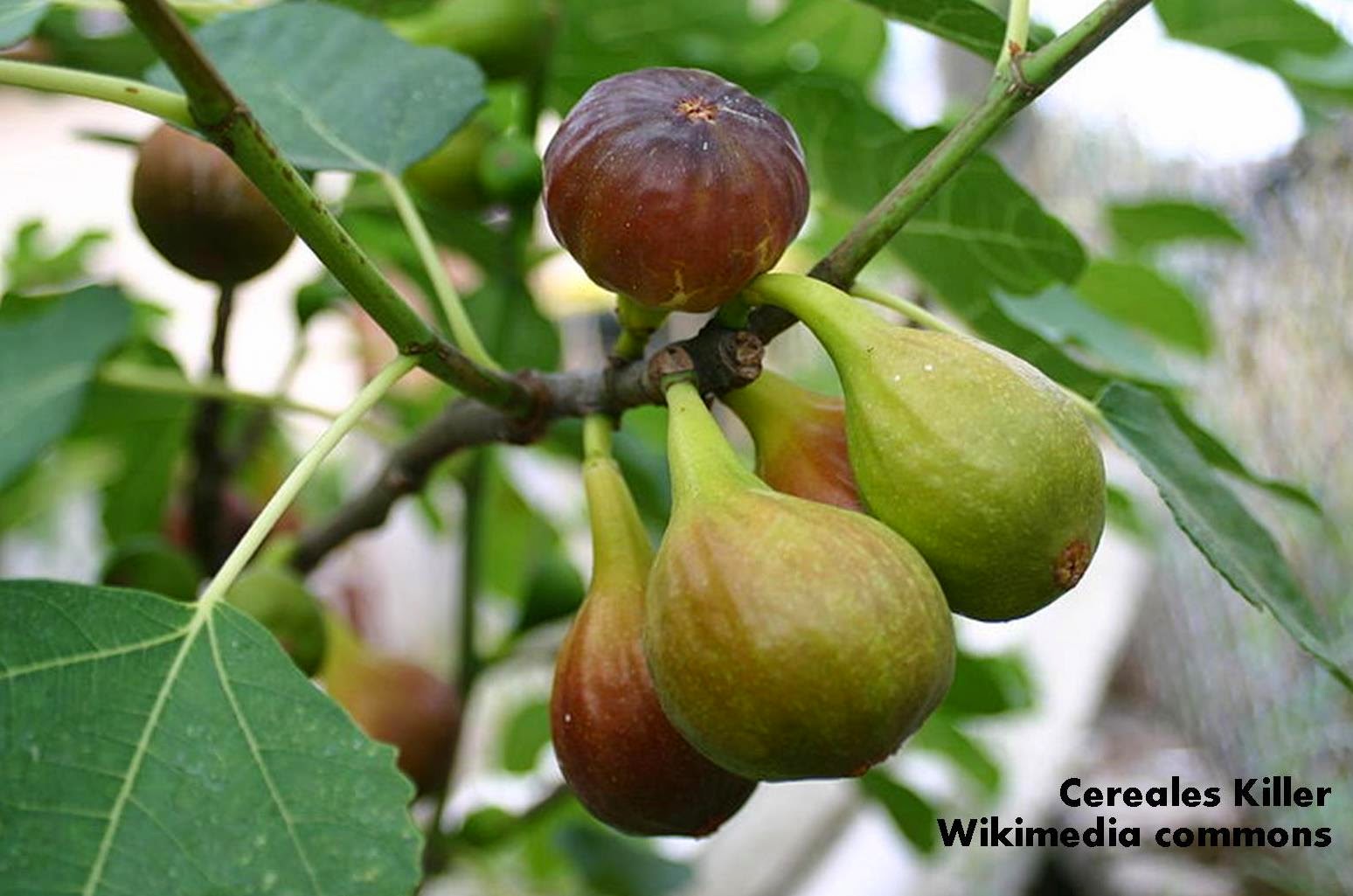
Brown fig
Ficus caria

For Fig tree suppliers in Roodepoort, see my Nurseries &Stockist page.

For fig pruning in to fans and espaliers (as well as pruning of other fruit trees) I recommend the following book: The Ultimate Practical Guide to Pruning and Training - How to Prune and Train Trees... by Richard Bird


______________________________________________________________________________

Please share with fellow gardening enthusiasts via the various sharing buttons at the end of posts/pages! Else you can vote for posts through the Google reactions bar at the end of articles. To stay up to date I have provided several reader and social networking platforms with which to subscribe: Twitter, Pinterest, RSS Feed Reader or Email/Follow directly using the Blog Followers widget on the left hand side toolbar. Thank you for reading and please feel free to ask if questions arise - I appreciate comments and ideas too! ðŸ˜†
_________________________________________________________________________________

Saturday, 17 May 2014

Bird Control: Visual deterents - An Update (Part 2)

Feral pigeon
Bird control, is similar to pest control, where you want to minimise damaged to your crops preferably through non-harmful (not in the case of pests! J) and environmentally friendly. You can purchase many of these bird deterrents, but hardly any of them are wallet-friendly, therefore I have opted for making my own or acquire ones with minimal cost. I posted one of my DIY bird deterrent devices a while back, which was based on reflective surfaces and bird’s visual spectrum. It really works! The only problem is that it needs sunlight to work, this means that when it is overcast or raining the pigeon thieves have free range over the chicken pellets and the black-eyed bulbuls perform aerial assaults on the figs and raspberries!!! To my utmost horror!

This is basically what it looks like in the chicken coop,
on & in the chicken feeder and on the surrounding walls!!!
When they are disturbed you get this huge 'fluttering' noise
and millions of them take to the sky!!!

It is the most terrible thing you ever did witness!!!

My biggest problem is with the pigeons & chicken pellets and the bulbuls with the fruits. I find the pigeons to be a bigger nuisance as they can clean out the chicken feeder several times a day leaving none for the chickens – this means the chicken are hungry and I am wasting pellets and money on pigeon thieves! These pigeons, known as city doves or street pigeons, are referred to as ‘feral pigeons’ (Columba livia), which were domesticated from Rock doves. They readily interbreed with other pigeons and have spread across most of the globe. Many people also called them ‘flying rats’ because of their pest value and bird deterrents are constantly implemented in urban – and agricultural settings to scare them away.

Geographical distribution of the Feral pigeon,
Columba livia

I set out on a few experiments to see whether I can get a back-up deterrent for when the sun don’t shine. I looked up a few alternatives online and found the following candidates:

1) Bird nets, spikes and wires… Now this isn’t going to work, it’s not like I can line the chicken feeder with these and the bird will swoop over them in the garden… I am not fond of netting over plants as this causes damage, such as braking of branches and fruits (I found this to be very true with frost fleece, especially so when it gets wet!).

Rock Dove spikes
2)  Sound deterrents, predatory birds and chemicals… Sound deterrents will likely scare the chickens as well, so "No" to that, I don’t want to keep falcons any time soon and chemical are definitely out of the picture!

3) Visual deterrents… So we are back here, other than more reflective devices, I can place stationary figure or outlines of natural predators around the garden and maybe even on the coop roof where the chicken won’t see them… So here are a few things that I tried:

A) Scarecrow: I made a scarecrow for the chicken coop to warn off would-be thieves, but it is only a temporary scare device as the pigeons become used to it. This means moving it around each day and re-dressing it, which is too much effort. So that idea has been scratched off the list.

My sad abandoned scarecrow...
probably an example of how not to do a scarecrow...
I think I can hear the pigeons laughing...

B) Rubber snakes: These can be purchased at the toy store. Although, I find that the birds ‘know’ how close they can get to the snakes without being in the hypothetical striking range. I had one on guard at the fig tree, another on the burglar bars at the tomatoes and one on the wall next to the raspberries. The tomatoes where left alone, but the figs and raspberries were still fair game! If I put the snake into the fig tree, they merely eat the figs on the opposite side! So my snake test wasn’t very successful…

My 'red' snake...

C) Flapping owl-thing: I found this at local craft market (Garden World). It is a plastic figurine of an owl with big oogly eyes on a pole and flaps its wings when the wind blows. It is marginally effective, because the birds were still picking off the raspberries when I had about a meter away staring at the raspberries. I put it right in the raspberry pot and that seemed to keep them off of that raspberry plant, but I have three raspberries and only one owl-thing. The cats were convinced that it was edible for a while and I had to show them several times that it is a ‘dead’ figure! J

Owl deterrent
It is a garden ornament, hence why it is in better condition

D) Fruit Shield: This started out as brown paper bags over some of the peaches. The idea was to mask or hide the fruits from the birds, but the paper bags are difficult to secure to the fruits and you can’t readily check up on them to see whether they are good to harvest. Then we decided to cut out pieces of the frost fleece and only cover the raspberries and figs instead of the whole plant (which causes damage). This worked fairly well, as the fleece hid the fruits from preying eyes and even helped them to ripen! The frost fleece lasts about 1-2 months and then completely disintegrates because of the weather exposure, so always keep a pack on hand.

Brown paper bags over peaches


Fig fruit shield
Now you see them, now you don't!


The conclusion of the experimentation is that:

1) For sunny days:

Reflective CDs work the best, but only when sunlight hits them. Another bonus is that the CDs keep deterring the birds without any additional input from my side, maybe they need a bit of a fix-up after a year of working in the wind, rain and sun J (some tiles fall off and some peel). They work for both the vegetable garden and chicken coop!

I have seen many versions of the reflective visual deterrents, such as red reflective tape, iridescent hanging ornaments, pieces of strung up foil and even blown-up wine bladders!

2) Cloudy/rainy days:

Cover fruits with cut-out pieces of frost fleece to protect them when it is cloudy or raining. They will need to be replaced once a month if cloudy weather persists due to disintegration. Again these don’t need extra input after installation and they allow easy access to check on ripening fruits. It can easily be applied to fruit clusters (raspberry) or a few individual fruits like the figs/peaches, but it might be a mission to cover and check each and every tomato!


All in all, the fruit shields worked well for keeping the birds away from the raspberries and the figs, but I still haven’t found a cloudy-day deterrent for the chicken coop… I will try a few more ideas throughout the year and report again on what I have found.


Large Pigeon Trap

LOL! J
Won't it be funny if I put one of these
badboys in the garden!! I just don't know
what you would do with them all once you
caught them...

Related post


______________________________________________________________________________

Please share with fellow gardening enthusiasts via the various sharing buttons at the end of posts/pages! Else you can vote for posts through the Google reactions bar at the end of articles. To stay up to date I have provided several reader and social networking platforms with which to subscribe: Twitter, Pinterest, RSS Feed Reader or Email/Follow directly using the Blog Followers widget on the left hand side toolbar. Thank you for reading and please feel free to ask if questions arise - I appreciate comments and ideas too! ðŸ˜†
_________________________________________________________________________________

Saturday, 26 April 2014

Caterpillars - Garden Pest of the Month

Caterpillars at a glance

Type of Damage
Chewing
Plant Symptoms
Holes in fruits, missing leaves, eaten leaves, ‘felled’ seedlings
Favourite Plant
Most food crops, especially tomatoes, fruit trees, grapes, citrus, sweet potato, Solanum family
Control
Biological (predators: wasps, mantids, assassin bugs & chickens), else physical removal


Caterpillar morphology
Quick Intro

Caterpillars are regarded as one of the most destructive insect pests that can devastate a food crop overnight! Some are specialists only feeding on certain host plants whereas other are generalists and will feed on anything green. Here I discuss some of the caterpillars that have cause havoc in my garden and listed a few similar species to be on the lookout for.

Science Stuff

Caterpillars are the larval or immature stages of moths and butterflies; these belong to the Lepidoptera order of insects. Sometimes caterpillars are referred to as worms, but they are not true worms (Annelida), such as earthworms.

Caterpillar is a derivative from the Latin words cattus (cat) and pilosus (hairy), which basically translates to hairy cat J. Many caterpillars are indeed hairy, which irritate the skin or mucous membranes of would-be predators. Some are even toxic as they sequester poisons in their bodies from compounds in their host plants. Toxic caterpillars display their toxicity through bright colouration, whereas other relies on camouflage for protection.

Alice and the Caterpillar

Interesting morphological characteristics: the last few segments on the caterpillar’s body have fleshy sucker-like legs, known as prolegs, with which they cling to substrates. They have silk glands, which are modified salivary glands mainly used to produce silk for pupation and cocoon construction.

Habitat & Feeding

Adults (butterflies and moths) are generally nectar feeding, whereas larvae are herbivorous and some species are insectivorous or detrivores.

The main objectives of caterpillars are to feed and grow. They are gregarious and feed in groups to ensure safety. Caterpillars feed on the underside of leaves, so be sure to check there when you are on the hunt. Caterpillars moult several times throughout their life as they grow (4-5 times). Plump caterpillars spin cocoons (silk) or pupate in chrysalis (non-silk). Here they undergo metamorphosis into their final butterfly or moth stage.

Caterpillars occupy a wide variety of environments and many have cosmopolitan distribution, which means you are likely not going to get away from them…

Diseases

Generally caterpillars don’t transmit plant diseases, but secondary bacterial, fungal or virus infections can set into affected sites which, have been eaten or stung (fruits and leaves). Holes eaten in fruits can become homes for other insects as well!


Citrus Swallowtail Butterfly, Papilio demodocus

Caterpillars of this family have large, striking butterflies of the Papilionidae family more commonly known as the Swallowtails. They have several district immature stages with different appearances, but all feed on citrus or members of the Rutaceae plant family (lemons, oranges and rue include a few).

Early stage caterpillars are black and spiny with white or orange patterns, this gives them a bird-dropping characteristic. Larger caterpillars lose these markings and become green with the classic swallowtail morphology; large eyespots on the head and thick fleshy body. All stages have a specialised scent gland (technical term, osmeterium) which is concealed behind the head and used as a defence mechanism. When disturbed they whip it out and try to stink you away! They pupate in chrysalis suspended by silk threads.

I had several infestations, they seem to come in waves, over the course of summer. They feed on any Rutaceae plant member, since I found them on my lemons, limes and curry plant!

Citrus swallowtail caterpillar two immatures,
Papillio demodocus

Citrus swallowtail caterpillar,
Papillio demodocus

Citrus swallowtail caterpillar osmeterium,
Papillio demodocus
Citrus swallowtail butterfly,
Papillio demodocus

Citrus swallowtail butterfly,
Papillio demodocus

Similar species in South Africa:
Mocker swallowtail (Papilio dardanus), Green-banded swallowtail (Papilio nireus).

Other similar species:
Citrus butterflies (Papilio anactus, Papilio eageus)


Green-striped Hawkmoth (Grapevines), Theretra jugurtha

Hawk or sphinx moths are very easy to spot with their streamlined bodes and large googly eyes. They are members of the Sphingidae family and the adults are active at dusk and feed on nectar. Larvae are hairless, bright green with a distinctive tail hook and pronounced eyespots. They pupate in the soil or under leaf litter in chrysalis.

Hawk moth caterpillars are fruit lovers, feeding either on fruiting bushes, vines or trees. They are often pests in orchard with damage to grapevines being severe. I also had huge infestations of these guys that came at my grapevine in waves! I only have one grapevine, so it goes to show how well the adults can sniff out grapevines on which to lay eggs. Be vigilant for these caterpillars if you have grapevines because they can destroy a plant within a few days before you even notice it (especially when you have had a lot of hail and you assume chewed leaves to be hail damaged leaves J).


Green  striped Hawkmoth large caterpillar on grape vine,
Theretra jugurtha


Green striped Hawkmoth large caterpillar,
mature ready to pupate,
Theretra jugurtha
Green  striped Hawkmoth,
Theretra jugurtha
Green  striped Hawkmoth,
Theretra jugurtha

Similar species in South Africa:
Cape Hawk/Grapevine Hawkmoth (Theretra capensis)

Other similar species:
Vine hawkmoth/silver-striped hawkmoth (Hippotion celerio)

Vine hawkmoth Hippotion celerio


Tomato semi-looper, Chrysodeixis acuta

Owlet moths from the Noctuidae (Agrotidae) family are highly destructive as adults and larvae. Night-flying adults pierce the skin of fruits which likely succumb to rot. Larvae are highly destructive, feeding on leaves and green fruits causing them to drop or rot or become hosts to other insects! Some species pupate in the soil (chrysalis) whilst others pupate in cocoons spun inside curled up leaves.

Spider has taken residence
in damaged tomato fruits

These are the biggest bane of my tomatoes, eaten leaves and green fruits. They caused about 30% loss in my tomato fruits last year (summer 2013) due to fruit drop or rot. I patrol the tomatoes in summer and check the underside of leaves and between developing fruits, pick of any culprits and feed them to the chickens (- at least I get my tomatoes back in the form of eggs J).


Silver U, Tomato semi-looper caterpillar,
Chrysodeixis acuta

Silver U, Tomato semi-looper pupae and moths,
Chrysodeixis acuta

Similar species in South Africa:
Golden Plusia (Trichopulsia orichalcea), Tomato/Cotton Leaf Moth (Spodoptera littoralis), African army worm (Spodoptera exempta)

Other similar species:
Green looper (Chrysodeixis eriosoma), Cabbage looper (Trichopulsia ni)


Cutworm (Any food crop seedling)

Cutworms are larvae from large groups of moths, Owlets (Noctuidae), who burrow in the soil and sever you seedlings at ground level. Morning reveals their night-time activity by a plot with ‘felled’ seedlings. They are very destructive and wasteful, cutting down an entire stand of seedlings overnight. There are several ways to stem their destruction through adding collars (cardboard) around your plants, starting your plants in pots and potting them out once they are large enough. Otherwise try potash, I think the tiny sharp particles aren’t fun to burrow through see more on my Pest control page. Starvation is another remedy, by leaving plot bare and removing weeds.

Cutworm, Noctuidae species
C-shape


Cutworm damage - a bit too late to put the collar on...


Cutworm collar


 Control

Birds are the main predator of caterpillars, seeing that most wild (black-eyed bulbuls, flycatchers) and domesticated birds (chickens) will do away at your vegetables as well – geese or ducks are more suited to insect pest control as their damage to food crops are minimal.

On the insect side, caterpillars are a favourite of parasitic wasps, but these are more suited to use in green houses (see Wasps post). Otherwise try to design your Insectary to attract paper wasps and mantids to clean out your caterpillar problems.

Biological caterpillar control

Chemical control likely would result in poisoning of other ‘higher’ insects, such as bees, spiders, mantids and wasps. Even organic solutions might affect other insects as well. Therefore, after biological control, I recommend removing them physically by hand and feeding them to the chickens (or put them out for the other birds J).

Preventative tips

The most successful way of limiting caterpillars is by reducing their host plant or making their host plant harder to find. Reduce large stands of one crop type (monocultures) and inter-plant your crops. This was very successful with my tomatoes, which I have had a reduction in crop loss by inter-planting the tomatoes and planting them far apart (limits walkover of caterpillars from one plant to the other).

Holes in tomato,
caterpillar damage by Tomato semi-looper

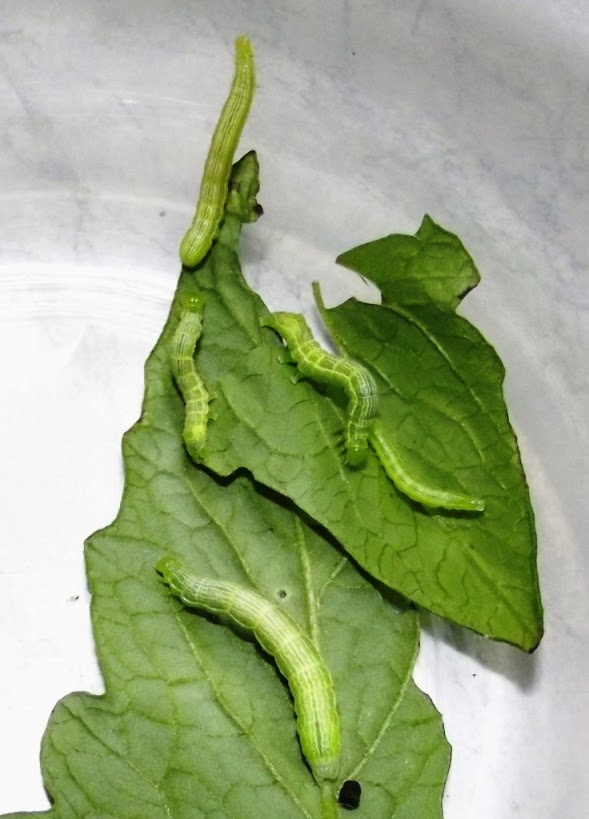
The best way to ID the caterpillar plaqueing your crops is to grab a few and 'incubate' them. Put them in a container with holes, feed them leaves and let it pupate. Photograph and take notes of the adult. The adult is the main ID stage for caterpillars. Most of the caterpillar here, I incubate in order to ID.

Green  striped Hawkmoth large caterpillar ,
infestation incubation,
Theretra jugurtha


Something cool: Earthwatch Institute

The Earthwatch Institute is a non-profit organisation that promotes research in the nature environment. They allow member of the public (volunteers) to join researchers on field expeditions when they collect samples and field data. You can join a research group by booking online at their website. Expeditions last several days to weeks and members of the public pay for their participation. Money raised through these expeditions is used for further research purposes.

Earthwatch
They have several projects, including ones for documenting caterpillars. They collect data on the biology and numbers of caterpillars in order to study their interaction with other insects, especially their parasitic wasps. The change in global weather pattern influence the rate of caterpillar developments, which in turn shortens the window for the parasitic wasps to locate, lay and develop in the caterpillar themselves. Researchers are interested in studying these dynamics, one such project, includes documenting the caterpillars of Costa Rica, more information on their website: EarthwatchInstitute.


"GRRR!"

Green  striped Hawkmoth large caterpillar on grape vine,
Theretra jugurtha


Related Posts/Pages


Recommended Books for pest control: Natural Pest and Disease Control 

______________________________________________________________________________

Please share with fellow gardening enthusiasts via the various sharing buttons at the end of posts/pages! Else you can vote for posts through the Google reactions bar at the end of articles. To stay up to date I have provided several reader and social networking platforms with which to subscribe: Twitter, Pinterest, RSS Feed Reader or Email/Follow directly using the Blog Followers widget on the left hand side toolbar. Thank you for reading and please feel free to ask if questions arise - I appreciate comments and ideas too! ðŸ˜†
_________________________________________________________________________________

Sunday, 20 April 2014

Food Revolution Summit: April 26 – May 4, 2014

Food Revolution Summit

Here is another online conference for those of you interested. Unfortunately I won't be able to listen to this one myself as I am going to be very busy during that time. It is a free online conference; you can register and find more information at their website: Foodrevolution.org

This summit is hosted by John and Ocean Robbins and concentrates mostly on food and the food economy (not specifically home vegetable gardening or food growing). It focuses on promoting health through healthy food choices.

P.S - I haven't forgotten about the summary post of the previous conference: Food Growing Summit 2014. I will be posting this in the near future! Watch this space!


Related Post:

Food Growing Summit 2014
How to start a productive and economic vegetable garden

Saturday, 12 April 2014

Starting a Productive & Economical Food Garden (Part 1): vegetables worth growing


Squash harvest for 20 December 2013!


I wrote this post because when I started vegetable gardening I didn't think that it would save a lot of money (maybe come out square?). We started the vegetable garden as part of a ‘productive hobby’ and more for the food quality you get from growing your own vegetables.

The economic state of South Africa has changed a lot since then and food prices have sky-rocketed! Not only is food more expensive, but I look at what they want you to buy and eat in the market these days and I am utterly appalled! So, seeing that I am ensuring our food security and quality; I did a little research (and some number crunching) to see whether we are saving money by having a vegetable garden.

PnP peas with worms and mould!
I cannot tell you how many times I have found worms in store-bought peas,
this is why I split them before eating....
Peas are cool season crops, so at least I eat my own in winter!


I was blown away when I started to diligently weigh and catalogue our harvests – the garden was pumping out vegetables like a food factory! Then after I had a good few months worth of produce, I worked out what we save in terms of R/kg of produce…

I have an 80% savings!!! Money wise this means that form the summer (Sep-Mar) garden only, we have gotten R3500 worth of 1500 individual produce items, which amounts to 120kg of produce!!! I keep my input costs at a minimum, the rain tanks pretty much pay for themselves by harvesting rainwater - so no expense on water – and we produce our own super compost from kitchen/garden waste and chicken droppings – so no soil expenses either. Also we use dried grass clippings as mulch - so no mulch expenses as well. Therefore, my expenses are seeds, plants, fertiliser and the occasional tool, which means that we save R2800 (80% of R3500) for summer crops. We only buy produce these days that are ‘out of season’, such as winter crops of leafy veg, peas, cauliflower, broccoli and things we don’t grow such as corn or apples/pears (too hot for pome fruits here).

Note: The prices I mention above are for PnP prices, if you buy at WW we pay R 1000-1500 more for the 120kg of produce! I didn't weigh or add the prices of leafy things and herbs, so my savings are likely to be more than estimated above!!

Harvest of Sweet Potatoes: 23 July 2013

While I was looking up prices I saw that some vegetables are dirt cheap to buy whereas others are horridly expensive. I compiled a list of food crops which are expensive (and easy to grow) to cheap. This means that if you choose to grow food items that are expensive to buy you’ll have a more economically viable vegetable garden, so here is the list:

Food item
Rands per kilogram
Category
Herbs
333-500 (20/30g pack)
Very Expensive
Pomegranate
250-285
Very Expensive
Spice
200-400
Very Expensive
Nuts
160-280
Very Expensive
Asparagus
100-250
Very Expensive
Berries
120-200
Very Expensive
Figs
150-170
Very Expensive
Peas
150-170
Very Expensive
Ginger
100-150
Very Expensive
Baby spinach
100-130
Very Expensive
Spring Onions
100-120
Very Expensive
Button mushrooms
90-100
Very Expensive
Tender stem Broccoli
90-110
Very Expensive
Garlic
75-120
Very Expensive
Spinach
80-90
Expensive
Pineapple
70-80
Expensive
Lettuce
60-75
Expensive
Leeks
60-75
Expensive
Radish
65-70
Expensive
Cauliflower
50-60
Expensive
Cherry Tomatoes
50-55
Expensive
Limes
50-55
Expensive
Peppers
45-60
Marginally expensive
Patties
35-40
Marginally expensive
Grapes
30-50
Marginally expensive
Mango/Pawpaw
30-40
Marginally expensive
Large pumpkins
30-35
Marginally expensive
Beans
20-50
Marginally expensive
Standard Tomato
20-50
Marginally expensive
Avocado
20-40
Marginally expensive
Lemons
20-30
Marginally expensive
Citrus
20-25
Marginally expensive
Jewel Sweet Potato
20-25
Least expensive
Cucumbers
15-25
Least expensive
White Sweet Potato
15-20
Least expensive
Red Onions
15-20
Least expensive
Banana
15-20
Least expensive
Red Potatoes
13-15
Least expensive
White Onions
10-15
Least expensive
White Potatoes
10-13
Least expensive
Beet
8-10
Cheap
Carrot
6-10
Cheap

I must just add in here: I am absolutely shocked at the price of radishes - it is more expensive than cauliflower! I mean a radish is a fool-proof veg, you sow them in the ground, they pop up and three weeks later you have radishes! So, always have some of these in the garden!

So when you start out a food garden, an herb garden is a very good place to begin as they are:

ü    Easy to care for
ü    Use minimal water
ü    Very productive
ü    Save a lot of money

After herbs; getting stuck on growing leafy vegetables, fruits (especially figs and berries), peas!, asparagus, tender-stem broccoli, garlic, ginger, leeks, cherry tomatoes and peppers are good crops to follow the herb garden. After which, you can go onto the large pumpkins, scallops (patty pans), beans, lemons, standard tomatoes and grapes.

Harvest of lettuce: 11 July 2013


I am thinking of establishing an asparagus patch… also I would say that asparagus is better left for when you are a bit more experienced and they need 3 years to start producing! The rest in the above list are very easy to grow; stick them in the ground and watch them grow! Your tomatoes and peppers will do well with some pruning, whereas the figs and berries might need some additional care. Squash need a lot of space, but are very productive (especially the bush varieties), beans and lemons are easy to grow and prolific whereas a grapevine might be attempted by the more experienced gardener with advanced pruning skills.

Here are a few of the profiles I have done so far on the top-expensive vegetables & fruits:
Several herbs: Basil, Oregano, Rosemary, Sage, Thyme
Fruits: Raspberries, Tomatoes, Peppers, Squash & Pumpkin, Figs
Vegetables: Peas, winter leafy vegetables, Radishes

Harvest for 22 Feb 2014!
Some of the other ‘expensive’ plants are exotics, ‘baby’ or ‘red’ varieties of the standard ones (such as red potatoes or baby spinach). I would also recommend the growing of exotic fruit varieties to more experienced gardeners and sometimes it’s just not feasible to grow these as they are 10-20m trees (mangos, pawpaw, avocado) that love tropic conditions! (But nothing prohibits you from trying dwarf varieties or miniaturising them yourself, which does take a good deal of pruning & ‘bonsai-ing’ knowledge). Whereas others are not very prolific for the amount of space they take up, such as pineapples.

The other vegetables listed towards the ‘cheaper’ side are by no-means inferior – you simply cannot beat the taste, texture and satisfaction of home-grown potatoes, sweet potatoes, cucumbers and carrots! These are especially easy to grow as well!

The Boer Patty!
30 Dec 2013

With so many vegetables to choose from where do you start? You want to grow them all!

...I’d say that check your fridge and see what you eat, then make a list of potential candidates and weigh them against their costs in the store, space they take up vs. production and their overall maintenance. This is a good place to start your vegetable garden that will produce high-quality food and will be cost-effective as well!

Other articles in the Series

Part 2: Conservation Agriculture
Part 3: Integrated Organic Gardening
Part 4: Vegetable Garden Planting Guide & Management 


______________________________________________________________________________

Please share with fellow gardening enthusiasts via the various sharing buttons at the end of posts/pages! Else you can vote for posts through the Google reactions bar at the end of articles. To stay up to date I have provided several reader and social networking platforms with which to subscribe: Twitter, Pinterest, RSS Feed Reader or Email/Follow directly using the Blog Followers widget on the left hand side toolbar. Thank you for reading and please feel free to ask if questions arise - I appreciate comments and ideas too! ðŸ˜†
_________________________________________________________________________________

Absolutely Gorgeous Beautique

Absolutely Gorgeous Beautique
Your beauty, weight loss, slimming and skin care salon of choice! Products with International Shipping!