Roots 'n' Shoots

Why is RnS Moving to whiskerflowers.wordpress.com?

Google had brought out an algorithm update in May 2017. With previous updates like Panda or Penguin, Mr G had penalized blogs or websites with low quality content and those more focused on aggressive adverts (including multiple ads or pop-up ads in articles). However, many blogs/websites that weren't shady got penalized beyond recovery too and a lot of people lost their income. The May 2017 update has had wide-scale effect on blogs and websites, but without any explanation from Mr G as to why or what it does. RnS has been hit by it too and hard. RnS organic search stats (i.e. users from Google) have dropped by 75% since. Even though RnS is not a source of income, I tried to figure out why RnS is being culled. It seems that it doesn't really have anything to do with RnS per se, but likely because RnS is FREE and not paying for page ranking (via AdWords or Ad Ranking). Now it is likely being aggressively shoved to lower page rankings to accommodate the paid ads.

I cannot rely on Mr G anymore to get RnS' content where it is needed. So I am busy moving RnS to Wordpress where you can find me as Whisker Flowers @ https://whiskerflowers.wordpress.com/

I am also imposing 301 redirects from already moved posts and pages!

- The Shroom - (AKA Whisker Flowers)

Saturday, 25 January 2014

Thyme: How to Grow - Herb of the Month

Thyme stats/requirements at a glance

Ease of Raising:
5/5 – Very Easy, plant and leave
Water:
1/5 – Minimal, weekly (especially in a container)
Sun:
5/5 – Full sun
Training:
1/5 – Minimal (3Ds: Dead, damaged and diseased)
Fertilise/Feeding:
1/5 – Minimal (at least during the growing season)
Time to Harvest:
1/5 – Immediate (purchased a seedling) to Soon (from seed)
Frost Hardiness:
1/4 – Very Hardy (can’t take black frost)


Uses:
Culinary, Medicinal, Pollinator attractor & Predator sheltering
Most Problematic Nemesis:
None, some die-back with over-watering
Container Plant:
Yes (preferably grown in the garden rather than container)

Wild Thyme
Thymus serpyllum
Flora von Deutschland Österreich und der Schweiz
1885
Kurt Stober's Online Library
Quick intro

Thyme is the quintessential herb for me and when I hear the word herb, thyme comes to mind with its tight clustering of leaves, minute flowers and great aroma. They are lovely to add to savoury dishes such as meat dishes, soups, casseroles, stuffings, stews and is likely best known for their addition to bouquet garni seasonings. They are very useful in the kitchen and vegetable garden as well as ornamental gardens due to their hardy nature and thriving where other plants perish.

History

As with its other aromatic cousins, Rosemary, Sage and Oregano; Thyme originated in southern Europe and the Mediterranean countries. Its name was derived from several different ancient languages, but the original was Greek ‘thuein’, which means to ‘burn’ or ‘sacrifice’, as it was customary to burn/use thyme during funerals or religious ceremonies by the ancient Egyptians, Romans and Greeks. During the Middle Ages, knights were bestowed thyme to bring them courage.

Science Stuff

Thyme belongs to the Lamiaceae family of aromatic herbs along with rosemary, sage, oregano, basil, mints, marjorams, balm and savory.

Common or Garden Thyme, Thymus vulgaris, is the most well-known and widely used. Several other wild and scented thymes are available, such as Lemon Thyme (Thymus x citriodorus), Caraway Thyme (Thymus herba-barona), Orange-scented (Thymus ‘fragrantissimus’) Spanish sauce (Thymus zygis), Broad-leaved (Thymus pulegioides), Winter-flowering (Thymus hyamalis), Cilician (Thymus cilicius), Creeping (Thymus quiquecostatus), Spanish/mastic (Thymus mastichina) and lastly, Conehead Thyme (Thymus capitatus). The easiest to find are common, lemon and creeping thyme.

Lemon Thyme
Thymus x citriodorus
The citrus scented thymes include lemon, orange and lime thymes. The caraway thyme has a potent caraway aroma produced by the same chemical, carvone. The wild thymes (Thymus serpyllum), creepers and woollies are more suited to ornamental use.

Thyme plants contain thymol essential oil highly regarded for its antiseptic properties and it exceptionally useful for treating stomach ulcers and even aging! The oils assist with digestion and breaking down fats.

Growing & Pruning Thyme

Seedlings are the easiest means of raising thyme, but you can try your hand at sowing seeds.

Well drained soil and a very sunny spot is essential for growing healthy, vibrant thyme. Over-watering or water-logged plants will die back, therefore no standing water in saucers if you are growing it in pots.

Lemon Thyme
Thymus x citriodorus
Thymes are very hardy to high temperature (30oC), but does not appreciate it too cold (below -12oC). Thyme will die off when it gets too cold, if you want to harvest from it during such as time,  make sure to dig your thyme up and bring it inside for the winter freeze.

Other Tips

You can plant basil with thyme in the same pot, where the basil will suck up any additional water that the thyme might not want. Also thyme can be combined with other water-efficient plants to limit watering.

Thyme is very hardy and can grow in any soil, including those that are very nutrient poor. This characteristic makes thyme excellent for rockeries, planting between stepping stones and other dry places in the garden that require plants. They are tolerant to being stomped on and the delightful scent they give off when trampled does make for a wonderful experience J.


Depending on what you like thymes come in upright varieties and creeping (matting) varieties, both will do with some minimal pruning if they become scraggly.

Thyme is evergreen and can be harvested throughout the year, but can be dried if you prefer its milder taste, else pruning cut-offs can be given to friends and family J

Thymes are replaced every 3-5 years to ensure strong flavoured leaves for cooking.

Thymol

Harvesting & Storing

Drying thyme: Simply save the pruned leaves and dry on a paper/cloth towel indoors for a few days in a dry (airy) place. Once dry they can be stored in glass jars.

Thyme scented oil: Similar to rosemary and oregano, thyme can be heated in oil (no boiling, only smoking oil, else the oil is destroyed and become heart-unhealthy J Boiling oil also destroys the aromatic oils form the herb). The oil is allowed to cool a bit (so that you retain heat as the sterilising agent, but not too hot that it will break the glass container you want to store it in J). The thyme leaves are removed and the oil is poured into a glass bottle (the leaves will become mouldy if left in the oil). This oil is especially useful for meat and savoury dishes! Or use as is with breads – Yum!


Seed Saving & Propagation

Thyme flowers are always a hit with the pollinators in the garden and their small form makes them very cute. Garden thyme makes lovely lilac flowers, but you get bright pinks, whites and purples as well!

Thyme tisane

Seed collection: The flower clusters are harvested when dry and separated (rub with fingers to release 4 ‘nutlets’ per flower) before storing in a glass container. Seeds are likely viable for 1 year only. I would also assume that the seeds require stratification (cold winter period of 1-6 months) as with the other herbs to break seed dormancy – a refrigerator works well at 0.5-5oC (33-41oF). Seeds are sown in a sunny position when the soil has reached 20oC (68oF) and germination takes up to 4 weeks.

Many of the aromatic herb family members can be propagated by the division of large plants. Any divisions should immediately be replanted at a different locations – that is to say if you want more than one J. You divide the plant by cutting straight down the centre (you can decide on the appropriate tool, such as scissors – a spade works well too!). Creeping thymes will easily split, but I am not too sure about the uprights. Stem cuttings can also be rooted in the appropriate rooting hormone during spring and summer.

My Thyme

Garden Thyme: The reliable go-to for cooking.


Garden Thyme
Thymus vulgaris

Lemon Thyme: Wonderful for adding a bit extra to meat dishes and grows far better than the garden thyme.


Lemon Thyme
Thymus x citriodorus

______________________________________________________________________________

Please share with fellow gardening enthusiasts via the various sharing buttons at the end of posts/pages! Else you can vote for posts through the Google reactions bar at the end of articles. To stay up to date I have provided several reader and social networking platforms with which to subscribe: Twitter, Pinterest, RSS Feed Reader or Email/Follow directly using the Blog Followers widget on the left hand side toolbar. Thank you for reading and please feel free to ask if questions arise - I appreciate comments and ideas too! ðŸ˜†
_________________________________________________________________________________

Saturday, 11 January 2014

Propagation: Alternatives to Artificial Rooting Hormone - Honey as Rooting Hormone

As part of being a gardener striving for natural and more wallet friendly alternatives I was on the lookout for a substitute to artificial rooting hormone.

I had several problems with the store bought stuff:
1)                  They give you so much that I can’t possibly use up everything before it expires.
2)                  You get three different kinds, one for soft-, semi- and hardwood cuttings! Why not make a universal one?

So I set out to research alternatives to rooting hormone and found two (1) being Honey and the other (2) Willow. Now I don’t have access to willow, but I can get a hold of honey… This lead me to thinking what would be the most efficient type of rooting hormone and I started some experimentation. I am going to go all ‘sciency’ now J

Honey

So let’s review the possibilities (hypotheses):
1)                  Are alternatives to rooting hormones superior in their rooting capabilities?
2)                  What can I use as a substitute for willow in the experiment for comparative purposes?
3)                  Do I use organic or processed honey?
4)         Will there be any difference between the organic and processed honey results?

Now let’s set up the experiment:
1)                  I will use basil cuttings to compare rooting efficiency as they root in water and I will be able to see the rooting process in a glass of water.
2)                  I will have one control, which is the basil cutting in water (this acts as the base-line for comparison to the other ‘experiments’).
3)                  The experiments are: (1) Artificial Rooting Hormone, (2) Processed Honey, (3) Organic Honey and (4) Aspirin as a substitute for willow.

For the exact details of each:
1)                  Artificial Rooting Hormone: Bayer Seradix B No. 2, semi-hardwood cuttings
2)                  Processed Honey: Eleures radurised pure natural honey
3)                  Organic Honey: On tap blue gum.
4)                  Aspirin: Compral (100 mg Paracetamol, 400 mg aspirin) contains aspirin (salicylic acid), which is a product of willow bark.

Rooting Hormones and water

OK! So here are my recipes for each of the experiments. In order to keep everything the same I made 100 ml solutions (liquids) of each and dipped the cuttings into each for 30 seconds. After which the cuttings are placed in a glass of clean 250 ml tap water. The control cutting was placed directly into tap water with no dipping in either solution.

Recipe for Artificial Rooting Hormone
1)                  I took the 2# rooting hormone powder and diluted it 1:1 with water to get essentially a 1# solution for the basil cutting.

Recipe for Honey Rooting Hormone (Processed & Organic) – this is a standard one found all over the Internet
1)                  Boil 2 cups of water
2)                  Add a table spoon of honey
3)                  Cool & dip cutting into solution

This is stored away from light (or in a dark brown glass jar) and will keep for 2 weeks. To make less, you can add 6 ml of honey to 100 ml of water.

Recipe for Aspirin
1)                  Added half a tabled (one tablet is 400 mg of aspirin) to 100 ml = 2 mg/ml solution.


All roots were recorded at the same initial length (this means it was said to be 'rooted' at the same length, this was @ 2 cm) and the experiment was done once the water control had rooted (as it was expected to take the longest amount of time to root).

Basil cuttings
The Results:

To my surprise the processed honey rooted first (12 days) and performed the best (longest roots and most roots by the end of the experiment). [I thought that the artificial rooting hormone would be first] The organic honey took 14 days to root with about half the number of roots and a 1/3rd of the final length of the processed honey's roots. The rooting hormone was about a week later (18 days) and had made two short roots by the end of the experiment. I think the Compral (aspirin) poisoned its cutting, because it died before any root formation on day 23. The control took its time and produced roots at day 37, the roots were minimal and less robust.


So, why does honey work better than artificial rooting hormone?

Well it has to do with the composition of honey. It is high in monosaccharides (simple sugars) such as Fructose and Glucose, as well as containing 18-20 of the 20 amino acids needed by all living organisms. This allows the cuttings access to quick energy and complete nutrition. The high sugar content lends to honey’s antiseptic (antibiotic) nature that prevents infection and promotes root growth.


The Conclusion:

So from the home-based experiment it is clear that grabbing some store-bought honey from the pantry is the best option for rooting cuttings. I think that this might be due to the higher sugar content of the processed honey and that it may have acted as a better antiseptic.


Honey as Rooting Hormone


So, I have decided to ditch the artificial rooting hormone and to make up enough honey every time I want to propagate. It is a shame that the aspirin cutting died, it would have been nice to compare the willow to honey, but I suppose I would have to leave that for those of you who have access to willow J It turned out to be a fun and interesting fact-finding home-experimentation...

BTW: I think that it would be a good idea to dip any grafts into the honey solution before grafting it to its final plant, to give it a good kick-start J I am going to try this with some nectarines and peaches…


-Me Out-

______________________________________________________________________________

Please share with fellow gardening enthusiasts via the various sharing buttons at the end of posts/pages! Else you can vote for posts through the Google reactions bar at the end of articles. To stay up to date I have provided several reader and social networking platforms with which to subscribe: Twitter, Pinterest, RSS Feed Reader or Email/Follow directly using the Blog Followers widget on the left hand side toolbar. Thank you for reading and please feel free to ask if questions arise - I appreciate comments and ideas too! ðŸ˜†
_________________________________________________________________________________

Wednesday, 1 January 2014

New Year Post: International Year Events 2014 & Garden Update

Each year since starting my blog I check on the event or study field listed for the coming international year. The “International Year Of …” cycles try to engage and educate people around the world concerning various issues or subjects that require attention or are of interest. This year we have two topics applicable (in the sense of gardening and science!):

1)                  International Year of Crystallography (IYCR 2014)

Now crystallography is fairly self-explanatory, all types of crystals and precious gemstones come to mind. Crystallography involves the study of crystal formation and their properties.

IYCR2014

The IYCR2014 also aims to bring awareness to the biochemical side of crystal making and studies, which is that of Proteins. Proteins have awe-inspiring 3D structures that assist with their function in living creatures. The study of protein functions therefore involves the re-construction of their 3D structure, which is not a simple task. So, biochemists make protein crystals, both in situ (inside a test-tube) and in sillico (inside the computer) J.

Protein composite
Molecular surface of several proteins showing their comparitive sizes.
From left to right are: Immunoglobulin (IgG) (PDB 1IGY), Hemoglobin (PDB 2DHB), Insulin (PDB 4INS), Adenylate Kinase (PDB 1ZIN), Glutamine Synthetase (PDB 1FPY).
Thomas Splettstoesser


For more information and dates of upcoming events see their website.
If you want to see some cool science 3D illustrations and animations check out SciStyle  – and for fellow scientists it’s good to have his details for upcoming projects that require modelling…


2)                  International Year of Family Farming (IYFF 2014)

Here is a topic that we all are familiar with and participate in everyday J. The IYFF tries to bring unity to families by encouraging them to ‘farm’ together or to create community smallholdings whilst ensuring a more sustainable future for all through organic practices.
For more information and dates of upcoming events see their website. The IYFF2014 is also supported by the International Federation of Organic Agriculture Movements.


Garden Update

We have been having soooo much rain lately!!! So much so I am having problems with mildews, moulds and black-spot on several of my plants and the lawn is littered with mushrooms – a rare sight in our usually scorching climate. Yet when it is not raining the sun is still burning everything to a crisp…

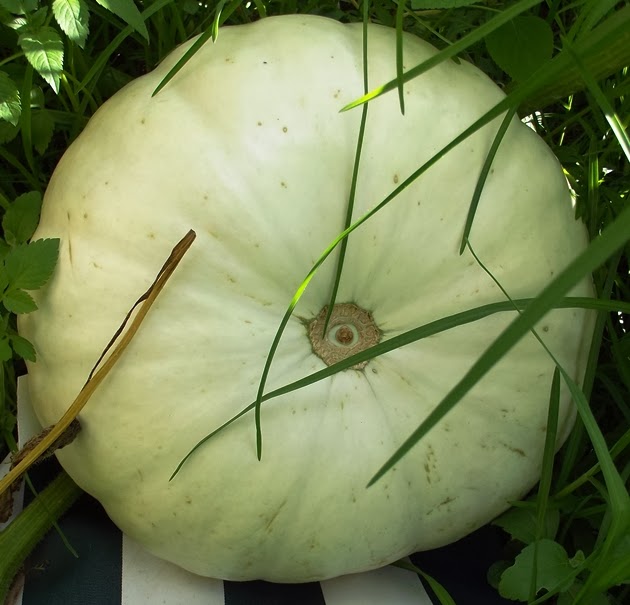
With all the rain the garden has gone absolutely crazy! Including the pumpkin patch and the pumpkins they produce. We harvested 8 kg worth of squash on the 30th of Dec 2013, because of all the rain some have grown enormous… like my newest record-braking Boer patty @ 1.157 kg, which larger than your face – can probably throw discus with it J . The first record holder was a 613 g green boer patty, which is the same as the largest yellow one in the photo below (check it out @ my folia journal). 


Here are a few photos of the forest that is the vegetable garden and the jungle that is the pumpkin patch;

1st half of veg garden

2nd half of veg garden

Insectary

Fruit Trees

Pumpkin Patch

Close Up
Onions & Potatoes also in the Patch

Flat White Boer
Starke Ayres 'Invincible'

Related Posts

How to Grow: Squash & Pumpkin
Insectary


_________________________________________________________________________________
If you enjoy the content please share with fellow gardening enthusiasts via the various sharing buttons at the end of posts/pages! Else you can vote for posts through the Google reactions bar at the end of articles. To stay up to date I have provided several reader and social networking platforms with which to subscribe: Twitter, Pinterest, RSS Feed Reader or Email/Follow directly using the Blog Followers or Follow Your Way widget on the left hand side toolbar. Thank you for reading and please feel free to ask if questions arise - I appreciate comments and ideas too! J
_________________________________________________________________________________

Saturday, 21 December 2013

The C Files: How to raise chickens – Housing and Coops

Confined chicken coop
Whether you provide a coop built from reclaimed materials or purchase a high-end fancy-schmancy chicken manor, all coops must fulfil a specific set of chicken requirements. Here I provide information on all requirements for any chicken housing, some additional optional(s) and provide basic designs to get you started.

Know what you need

There is no ‘perfect, one-size fits all chicken coop’. That is where your needs and limits determine the final design of your chicken coop. There are a few things you need to consider before jumping into building or purchasing a coop:

1)     Local bylaws. Municipal by-laws exist in every town/city and may entail a detailed plan for coop construction. The coop design and construction may be limited by the number of chickens or possible locations (such as, not close to your neighbour’s bedroom!). Here is the pdf for the local by-laws of Johannesburg (and the surrounding area), chickens are on pages 60-62.

2)     Location. Where would you like to have your chicken coop? Against a wall, which may provide one of the walls of the coop? Or out in the open, which requires a sturdy foundation. The amount space available in the yard may limit the amount of chickens you can keep and the final size of the coop.

3)     Weather. You need to build a coop that can withstand your climatic conditions. If you live in areas with cold winters or hot summers it may require some insulation to limit the effects of temperature on your chickens inside. Heavy wind and rains will require sturdy and rot-proof construction.

4)     Mobile or stationary. Mobile chicken coops (known as tractors) assist with confining chickens for protection or for pasture management. Stationary coops remain in place as permanent shelter for chickens and are sturdier than mobile coops.

Mobile chicken coop

5)     Predators. Identifying possible chicken predators will also assist with designing a safe chicken coop. Animals such as birds of prey, foxes, mongoose, baboons, monkeys and large wild/feral cats each require certain alterations to the coop in order to keep them out.

6)     Chickens. The amount and breed of chicken is directly correlated to the size and space needed in the coop. More chickens or larger breeds necessitate larger coops.

7)     Purpose. Chickens acquired for egg purposes (layers) will have different needs and different coop designs than chickens kept for meat (broilers). Hens are smaller and require nesting boxes, whereas cocks are larger and noisier (might affect where you are allowed to construct your coop according to by-laws). If you want to breed and raise chicks, additional housing needs to be provided for broody chickens, incubators, chick raising houses and hens with chicks need to be separated from the rest of the flock for safety.

Coop Necessities

All chicken coops must have the following in order to have happy healthy chickens:

1)      Enough space for each chicken

The space needed for each chicken depends on their age and breed. The more space your chickens have, the happier and healthier they will be. Space allows members in the low ranking of the pecking order to escape bullies and hide. If you have several cocks, large coops allow each of them to have their own space and boss around their hens without being it one another’s faces and less fighting will occur. Additional space allows chickens to scratch and be occupied until they are let out for the day to minimise pecking.

                         Coop dimensions
Breed
Coop with run/yard*
Confined coop*

m2 per bird
Birds per m2
m2 per bird
Birds per m2
Heavy
0.37
3
0.92
1>
Light
0.27
3
0.70
1.5
Bantam
0.19
5
0.46
2
                         * Measurements based on fully grown chickens (21 weeks +)
                            Based on Storey's Guide to Raising Chickens by Gail Damerow (2010).

2)      Good ventilation

Chickens have a higher respiration rate than most other animals and good ventilation is important. Doors and windows provide ventilation for the coop. This limits the build-up of disease organisms, ammonia and/or dust from the litter, skin and feathers of the chickens. Good ventilation prevents respiratory problems. Ventilation also helps to regulate the coop temperature and windows allow light into the coop. Doors can also be fitted with mesh wire or window screens to increase ventilation during the summer months. Windows can be made to slide or tilt to open and close during bad weather.

3)      Free from drafts

Drafts inside the coop will affect chicken health, especially if the chickens have gotten wet during rain. Drafts blowing onto wet chickens will make them ill. So limit drafts in your coop design or adjust your coop with panelling to minimise drafts.

4)      Stable and comfortable temperature to shelters chickens from wind and sun

This goes hand in hand with good ventilation, extreme cold or hot weather will have adverse effects on chickens. Chickens prefer temperatures between 20-25oC (70-75oF) and casualties may occur when their bodies exceed temperatures of 35oC (95oF). The coop temperature range should preferably stay between 5-28oC (41-82oF).  Additional shade can be provided by free-standing shelters on the property (known as range shelter and can be a roof on posts with a water fountain.) Chickens should be able to shelter from rain as well, especially in the afternoon. Chickens should not be allowed to go to bed wet, else they become ill.

Note: Body temperature and ambient temperature are not equal (i.e. 35oC outside does not mean your chickens’ bodies are at 35oC).


5)      Protects chickens from predators

Chicken coops can be raised 0.5-1 meters from the ground to limit access by predators. Raised coops also prevent rodents from nesting under the coop. Chicken runs or confinement with fencing allows additional protection of birds from daytime predators. Flying predators or those with opposable thumbs (monkeys, baboons and some unsavoury Homo sapiens) will need to be kept out by fencing the roof of the run as well and the doors/windows need to be secured with locks. Posts and fencing can be buried to limit predators from digging underneath the fence.

Permanent chicken coop
6)      Allows light in during the day

Chicken maturity; the amount, size, age and production capacity of egg laying pullets is affected by the amount of total daytime light they receive. Eight to ten hours of daylight is sufficient for healthy chickens.

7)      Provides adequate roosting space

Chickens roots naturally at night on tree branches. Roosting maintains correct body posture and keeps chickens away from droppings. Light breeds will be able to fly up and reach high roosting perches whereas heavier breed will require roosts lower to the ground. Chickens should have adequate roosting space to rest peacefully. Perches can be 5-6 cm in diameter (2-2.5 inches) for regular chicken breeds and 2 -3 cm (0.8-1.2 inch) for bantams. Each chicken should have 25 cm (10 inches) of perching space. Larger breeds do well with 30 cm (12 inches).

8)      Enough clean nesting space for chickens to lay eggs

Nest boxes should be darker than the surrounding coop where hens feel safe and away from prying eyes. Nests allow for easy collection and straw or pet bedding reduces the chance of eggs being broken. You should supply one nest for every four hens. (Although there are two nest boxes, our chickens all prefer to lay in the same nest and will queue to do so J). Nest boxes should be higher than the surrounding coop and make sure that they are waterproof. Special nest-boxes can be designed with a double floor. The top one has nesting material and a grate, the bottom floor is slanted and directs the eggs away from the chicken when they are laid to keep them clean.

  Nest box dimensions
Breed
Width, cm (inch)
Height, cm (inch)
Depth, cm (inch)
Heavy
40 (16)
40 (16)
35 (14)
Light
35 (14)
40 (16)
35 (14)
Bantam
30 (12)
35 (14)
30 (12)


9)      Clean feeders and water fountains

Clean feed and water is essential to all animals. Please refer to my Feed & Water article for complete information.

Basic chicken coop

10)  Easy to access and clean

Coops should preferably be a comfortable human height. This makes access to eggs, feed, water, chickens (for health checks) and easier cleaning… something we didn’t do, I always end up with a kink in my back J after cleaning.

11)  Will not flood or become mucky when it rains

You don’t want your chickens to wash away neither should mud be tread into the coop by humans or chickens. It makes for unsanitary conditions.

12)  Litter/bedding

Pet bedding, chopped straw and wood shavings are placed on the floor of the coop and under perches. This helps to keep coops clean, as they stick to manure and are easier to sweep. Bedding, or litter, also absorbs excess moisture, provides some insulation and cushions chicken feet. A good source of coop litter is well-dried, untreated (by chemicals) lawn clippings. A good layer of litter (5 cm or 2 inches) can be added under perches to compensate for the increased droppings. If you like; you can install a tray system to collect droppings under the roosts (which take the most hammering as chickens do most of their dropping-business at night) and this will make for easy clean up.


Optionals

Pop hole/chicken door

A wide chicken-sized door can be added to the coop for chicken-friendly access and to keep out larger animals (dogs or goats). It also reduces drafts and can be easily automated.

Confined chicken coop with pop hole

Automations (doors, windows, fans, lights, electric fencing)

With the advent of modern technology; windows, doors and lights can be set to automatically open or turn on depending on the amount of light captured by their sensors (or “eyes”). Doors will open at dawn and close at dusk after chickens have entered the coop to roost for the night. Windows can open and close when temperatures fluctuate to control the coop environment. Fans can be installed for additional ventilation and temperature control, whereas electrical fencing can scare off potential predators.

Rain water collection

If you design your coop with a slanted roof (to prevent pooling and direct water away from the doors) you can add a gutter and water collection tank to catch any rain from the roof. The water, which is clean and fresh, can be used to supplement the chickens’ water need or used in the garden.

Edible bedding

Some of the litter in the coop can be substituted with edible straw (such as wheat, rye, oat, buckwheat or even alfalfa). This provides additional nutrition to the birds (green manures can be dried for fodder) and gives chickens something to do till the coop door opens.

Compost

Droppings and litter can be added to the compost heap. After it has decomposed, chicken manure is invaluable as fertiliser for vegetable gardens.

Basic Coop Designs

Here are some illustrations and brief explanations to some basic designs for your chicken coop. Alternatively pre-made coops can be purchased or Wendy-houses/sheds can be re-purposed to house chickens.

Below is a design for a stationary chicken coop. It provides permanent shelter and can be outfitted with a rain water harvesting tank.

Basic Stationary Chicken Coop

Here is another stationary coop design, known as a chicken tractor. It is more suited to a small garden or a small flock.

Stationary Chicken Tractor
The stationary chicken tractor can be modified to sport wheels or skids and can be moved manually or by draft animals. This system allows limited chicken grazing, to prevent them scratching a garden to dusts and forms part of a farm’s pasture management.

Mobile Chicken Tractor
Henmobile or Eggmobile or EggCart

A pre-made coop from the Omlet range (www.omlet.co.uk). They have all-kinds of shapes, sizes, stationary and mobile coops is bright colours. Omlet also provides housing for other pets (hamsters, guinea pigs and rabbits) and other animals (bees).

The Omlet Eglu range of pre-made chicken coops


Last Notes

No chicken coop need be plain, boring or an eye-sore. A little bit of paint and some creative thinking can turn a coop into a garden show piece. The Internet is bursting with all kinds of coop designs; from simple ones like I have here to brightly coloured, massive mansions with pillars and terraces! One of the blogs I am following: The Garden Roof Coop, and the Backyard Chickens website is a good place to start looking for some cool and practical coop designs.


Large chicken coop with run


Additional measurements and a similar 'basic stationary coop' design can be found in Storey's Guide to Raising Chickens by Gail Damerow (2010).


Previous articles in this series

Food & Water


______________________________________________________________________________

Please share with fellow gardening enthusiasts via the various sharing buttons at the end of posts/pages! Else you can vote for posts through the Google reactions bar at the end of articles. To stay up to date I have provided several reader and social networking platforms with which to subscribe: Twitter, Pinterest, RSS Feed Reader or Email/Follow directly using the Blog Followers widget on the left hand side toolbar. Thank you for reading and please feel free to ask if questions arise - I appreciate comments and ideas too! ðŸ˜†
_________________________________________________________________________________

Absolutely Gorgeous Beautique

Absolutely Gorgeous Beautique
Your beauty, weight loss, slimming and skin care salon of choice! Products with International Shipping!